Bria Alternative for MSPs: Test Provisioning and Push

Bria Alternative for MSPs: Test Provisioning and Push
Searching for a Bria alternative usually means the dial pad is not the real problem. Managed service providers (MSPs), internet telephony service providers (ITSPs) and IT teams are more often trying to reduce tenant setup time, improve mobile call reliability, standardise security, control branding or give support staff better evidence when calls fail.
Bria is an established softphone family, and replacing a working deployment simply because another app has a longer feature list can create more risk than value. A useful comparison therefore starts with the operating model around the app. The question is not “Which softphone has the most ticks?” It is “Which option can we provision, secure, support and scale with the least avoidable friction?”
This guide turns that question into a practical pilot for a business Session Initiation Protocol (SIP) softphone estate. It can be used to compare Bria with SessionTalk or with any other candidate without relying on unverified feature claims or a polished sales demonstration.
Start with the event that triggered the search
Write down why the evaluation exists before anyone installs a new app. Otherwise the pilot will drift into subjective comments about interface colours and button placement.
For a provider, the trigger may be onboarding hundreds of users without exposing SIP passwords. An MSP may need one repeatable process across several private branch exchange (PBX) platforms. An internal IT team may be responding to missed mobile calls, inconsistent headset behaviour or a difficult offboarding process. A reseller may need its own identity in app stores and a release process it can explain to customers.
Turn the trigger into one measurable outcome. Examples include:
- reduce a standard ten-user tenant setup from two hours to thirty minutes;
- achieve an agreed inbound-call success rate while phones are locked;
- remove a departed user and revoke access within fifteen minutes;
- apply an account or dial-plan change without asking users to re-enter credentials;
- collect enough diagnostics to classify a failed call during the first support contact;
- deliver a branded customer experience without taking ownership of an app-development programme.
These outcomes make a Bria alternative evaluation commercially useful. They also stop a low-value feature from outweighing the operational reason for change.
Build a tenant that resembles production
A one-user test on perfect office Wi-Fi proves almost nothing. Create a small tenant that represents the difficult parts of your estate while remaining safe to roll back.
Use roughly ten people across support, sales, operations and administration. Include both Apple iOS and Android phones, at least two current desktop operating systems, Bluetooth and USB headsets, home broadband, managed office Wi-Fi and mobile data. If your customer base uses several PBX products, connect the pilot to at least two representative systems rather than assuming that one successful SIP registration proves universal interoperability.
Define the call journeys before testing:
- an inbound call from the public telephone network to a direct number;
- a call arriving through an interactive voice response (IVR) menu or queue;
- an outbound call with the expected presentation number;
- a blind and attended transfer;
- hold, resume, mute and dual-tone multi-frequency keypad entry;
- a call launched from a `tel:` or `sip:` link on desktop;
- a call that moves between Wi-Fi and mobile data;
- an emergency-call scenario handled according to your carrier policy.
The last item needs special care. A softphone can be used from locations that do not match the registered service address. Document how emergency calling, location information and user warnings work in every country you serve; never infer compliance from an ordinary outbound call.
Time provisioning from an empty device
Provisioning is where two apps with similar calling features can produce very different support costs. Test the whole journey from an unconfigured device, not just the final QR code or download link.
Start a timer when the administrator receives a new-user request. Record each manual action needed to create the user, select the correct tenant or customer profile, assign SIP credentials, apply transport and codec settings, distribute the app and confirm registration. Then repeat the test for a bulk change and an offboarding request.
Keep credentials away from copy-and-paste workflows
A user should not need a reusable SIP password in an email or ticket when a protected provisioning method is available. During the pilot, inspect what appears in messages, device logs, screenshots and the app interface. Determine whether an administrator can rotate credentials without scheduling a call with every user.
Also test account recovery. If an employee replaces a phone, can support authorise the new device and invalidate the old one? If a QR code or enrolment link is forwarded, what prevents unintended reuse? The right answer depends on the platform, but the control must be deliberate.
Change policy without rebuilding the account
Make at least three central changes after enrolment: adjust an outbound proxy, change a codec preference and update a dial rule. Check how quickly endpoints receive each change and whether the user must sign out, reinstall or enter credentials again.
A centrally managed cloud softphone should reduce repetitive endpoint work. If you want more detail on the delivery model, see how providers deploy branded SIP apps with a cloud softphone platform.
Put mobile push through hostile conditions
Mobile operating systems suspend background applications to preserve battery. Push notification services wake the softphone for an inbound call, but a “push supported” tick does not prove that calls will ring reliably in your users’ real conditions.
Create a repeatable matrix for each test phone:
- screen locked for at least thirty minutes;
- app removed from the recent-apps view;
- low-power or battery-saver mode enabled;
- office Wi-Fi with the device idle;
- home Wi-Fi behind a typical consumer router;
- mobile data with a weak but usable signal;
- a transition from Wi-Fi to cellular before and during a call;
- device-notification permissions disabled and then restored;
- two incoming calls close together;
- an expired or deliberately removed SIP registration.
Place enough calls to identify a pattern rather than celebrating one success. Record whether the phone rings, how long setup takes, whether answering produces two-way audio, and whether the PBX reports a normal result. Separate push delivery from SIP signalling and media. A device can display an incoming-call alert yet still fail during registration, call setup or Real-time Transport Protocol media negotiation.

When a test fails, preserve timestamps, PBX call identifiers, app logs and the network state. This evidence helps determine whether the problem belongs to push delivery, Domain Name System resolution, Transport Layer Security (TLS), SIP authentication, Network Address Translation (NAT), routing or media.
For a deeper diagnostic sequence, use the SessionTalk guide to mobile softphone push notifications alongside your pilot log.
Make SIP interoperability earn its score
“SIP compatible” describes a protocol family, not guaranteed behaviour across every PBX, session border controller and carrier. Test the candidate against the exact infrastructure combinations you sell or operate.
Confirm registration refresh, authentication, outbound proxy use and failover behaviour. Exercise common codecs such as G.711 and any compressed codec your network requires. Check dual-tone multi-frequency transport for IVR entry, early media for announcements, caller-ID formatting, voicemail indicators and transfer methods. If IPv6, multiple accounts or video matter to your service, put them in the acceptance plan explicitly.
Encrypt signalling and media deliberately
TLS protects SIP signalling in transit, while Secure Real-time Transport Protocol (SRTP) protects audio media. Enable the policy you intend to deploy, validate certificates correctly and confirm the app does not silently fall back to an unapproved transport.
Encryption alone does not solve credential exposure, vulnerable provisioning links or excessive log retention. Review where configuration is stored, who can retrieve diagnostics and how long support data remains available. If your PBX and mobile client disagree about certificate names, cipher support or SRTP negotiation, capture that during the pilot rather than weakening the production policy to make the test pass.
Test recovery, not only the happy path
Restart the PBX, interrupt the network and temporarily make the primary proxy unreachable. Observe how quickly the client re-registers, whether queued inbound calls recover and whether users receive a useful status. A candidate that works beautifully until the first failover may create more tickets than the app it replaces.
Treat branding as an operating responsibility
For resellers, branding is not just a logo and colour palette. A credible white-label softphone plan should define who owns the app-store listing, signing certificates, privacy disclosures, screenshots, release notes, review responses and upgrade schedule.
Ask the candidate provider to walk through a real release lifecycle. How are operating-system compatibility updates delivered? Can a critical fix be expedited? What happens when an app-store policy changes? Can one customer have a distinct identity without creating an unmanageable fork? Which elements are configurable and which require a new build?
Then check how branding affects support. Users should be able to identify the correct app and reach the intended help route. Your support team needs release and version visibility so it can distinguish an outdated client from a tenant configuration problem.
A branded app can strengthen a reseller offer, but only when release governance is clearer than building and maintaining the client yourself.
Count every administrator touch
The winning option is not necessarily the one that finishes a scripted call first. Measure how many administrator and support actions are required across the pilot.
Track these events for each candidate:
- new tenant creation;
- single-user and bulk enrolment;
- PBX template or domain changes;
- device replacement;
- credential rotation;
- user suspension and deletion;
- retrieval of call diagnostics;
- escalation to the software provider;
- client update and rollback communication.
For each event, record elapsed time, number of screens, manual data entry, required privilege level and any dependency on the end user. Multiply frequent events by your expected monthly volume. Five saved minutes can be commercially significant across thousands of user changes, while an elegant feature used twice a year may have little operational value.
Support quality should also be tested, not assumed. Open a controlled ticket with a complete evidence pack. Measure acknowledgement time, whether the first response uses the supplied logs, and whether ownership boundaries between softphone, PBX, network and carrier are understandable.
Score the decision without hiding trade-offs
Give every acceptance test an owner, threshold and evidence source before the pilot begins. Use weighted categories that reflect your trigger rather than assigning every feature equal importance.
A provider-led evaluation might give provisioning and tenant administration 30 percent, mobile reliability 25 percent, SIP interoperability 20 percent, security 15 percent, and branding plus support 10 percent. A regulated internal deployment could weight security and auditability much more heavily. The exact distribution matters less than agreeing it in advance.
For every failed threshold, classify the result:
- blocker: exposes unacceptable security, compliance or call-availability risk;
- configuration issue: fixable through a documented tenant or PBX change;
- product gap: requires a roadmap commitment or changed process;
- test defect: caused by incorrect data, an unsupported environment or an invalid method.
Require evidence before changing a classification. This keeps a preferred vendor from receiving informal exemptions and protects the incumbent from being blamed for unrelated carrier or network faults.
Preserve a clean return path
Do not remove the existing app during the pilot. Keep numbering, routing and credentials separable where possible, document the rollback owner and decide what data must be exported. Migrate in cohorts only after the representative tenant meets its thresholds.
Offboarding the candidate is also a useful test. Revoke pilot users, remove configuration access, confirm what logs remain and check that inbound routing returns to the original path. Reversibility gives the team room to learn without turning an evaluation into an outage.
When Bria may still be the right answer
An alternative search does not have to end in a replacement. Staying with Bria can be sensible when the current deployment meets the measurable target, users are productive, security controls are acceptable and the cost of retraining or migration exceeds the operational gain.
The pilot may instead reveal a configuration problem in the PBX, push setup, network or support process. Fixing that root cause can produce a better return than changing clients. It may also show that different user groups need different answers: a simple app for occasional callers and a centrally managed, branded client for customer-facing or high-volume teams.
A fair decision compares total operational fit. Recheck current Bria documentation and commercial terms directly because product packaging, platform support and licensing can change. Apply the same scrutiny to every alternative, including SessionTalk.
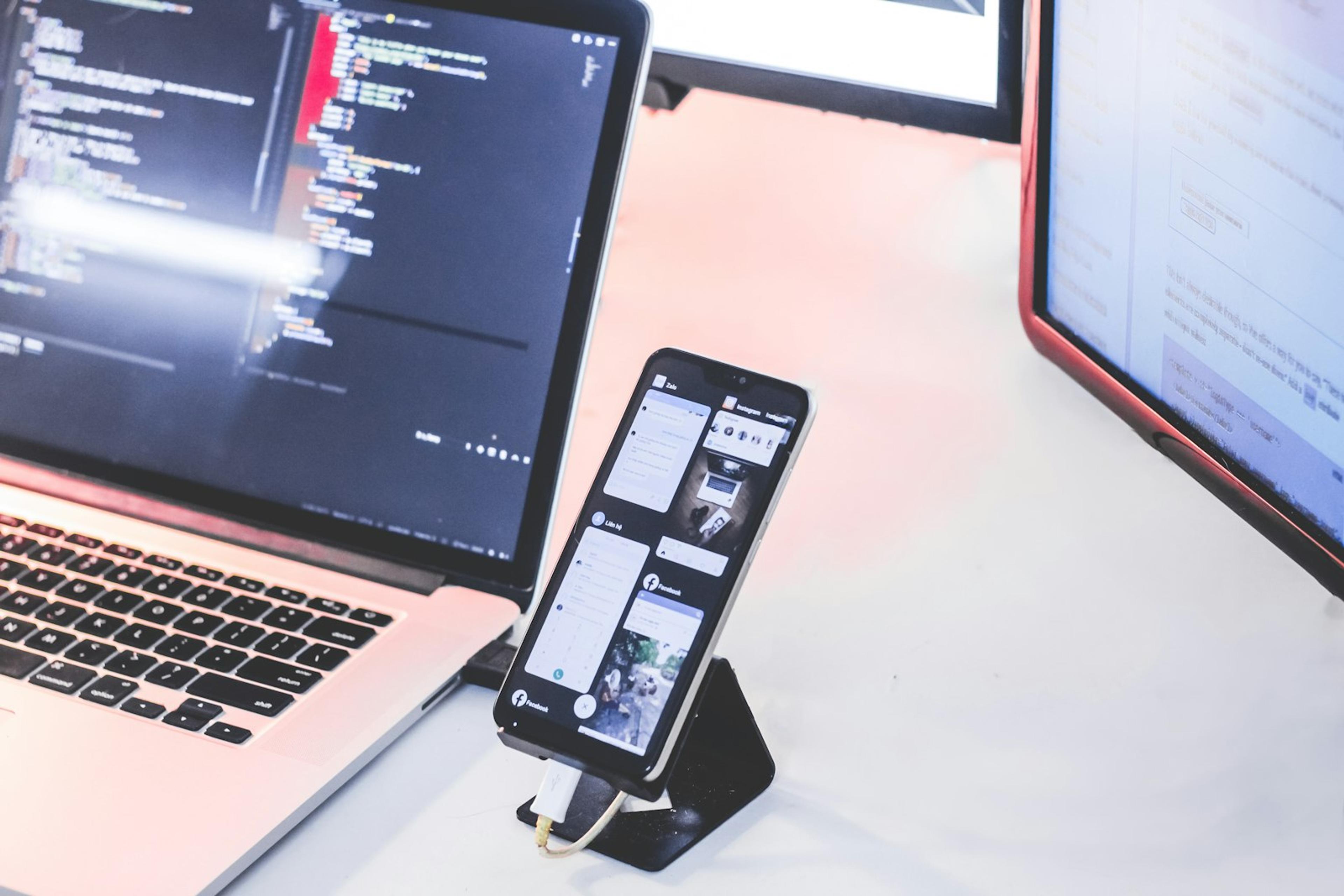
Run a SessionCloud pilot with evidence
If central provisioning, mobile push reliability and provider-ready softphone operations are the reasons you are reviewing Bria, start a free SessionCloud trial with the ten-user test above. Use your own SIP service, PBX routes and devices, then keep the call results and administrator timings as evidence. For white-label or reseller requirements, contact SessionTalk to map branding, rollout and support responsibilities before committing to a migration.
Choose the operating model, not the longest feature list
A useful Bria alternative evaluation begins with a business trigger and ends with measured evidence. Provision from an empty device, rotate credentials, wake locked phones, cross Wi-Fi and mobile networks, enforce TLS and SRTP, break the primary route, retrieve diagnostics and remove the pilot cleanly.
Those tests reveal the costs that a feature checklist misses: administrator time, missed calls, unclear ownership and difficult recovery. Whether the result is to stay with Bria, deploy SessionTalk or investigate another candidate, the decision will be grounded in the way the softphone must actually operate for your users and customers.