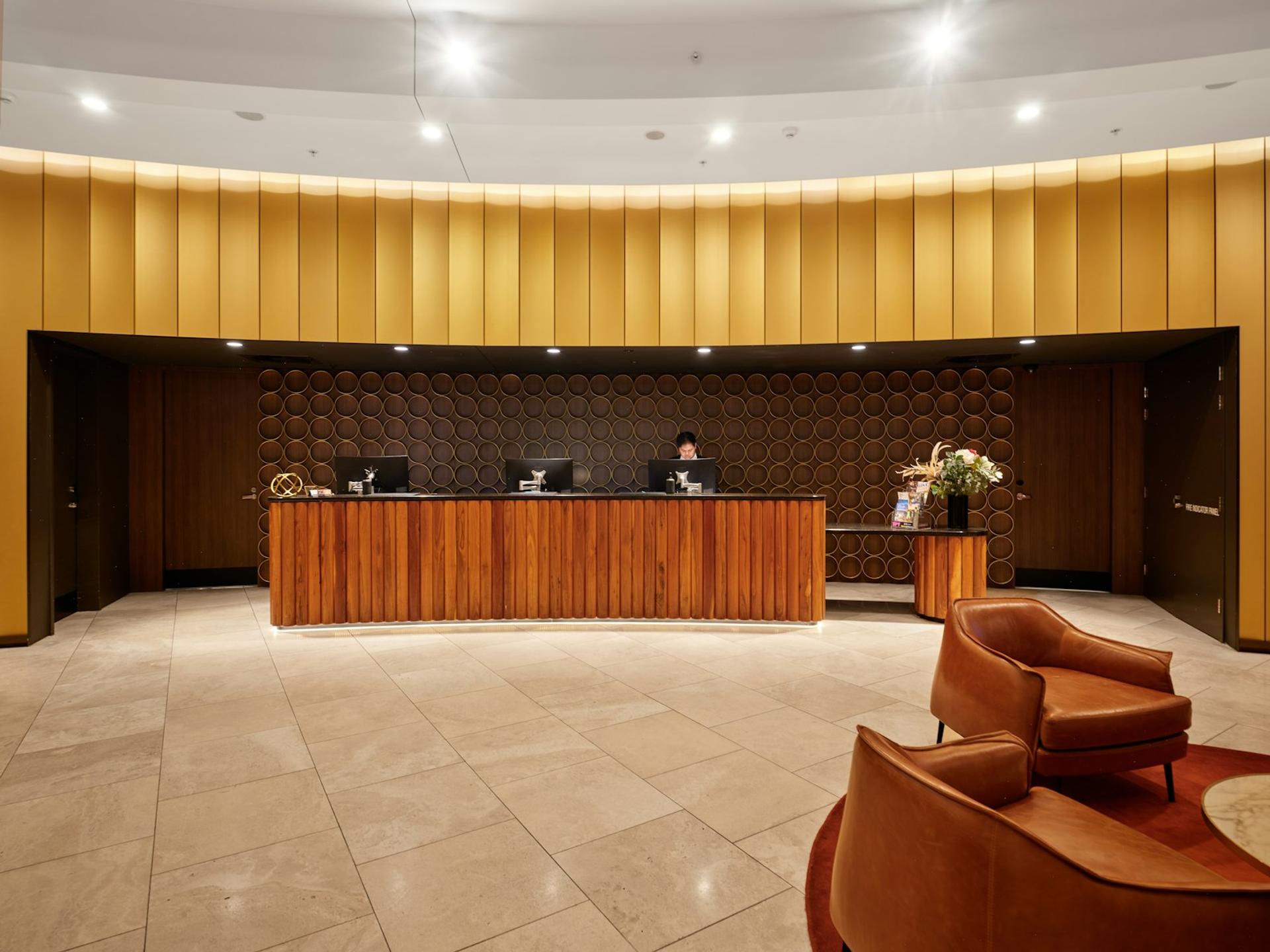
Cloud PBX for Hotels: Connect Front Desk and Mobile Staff
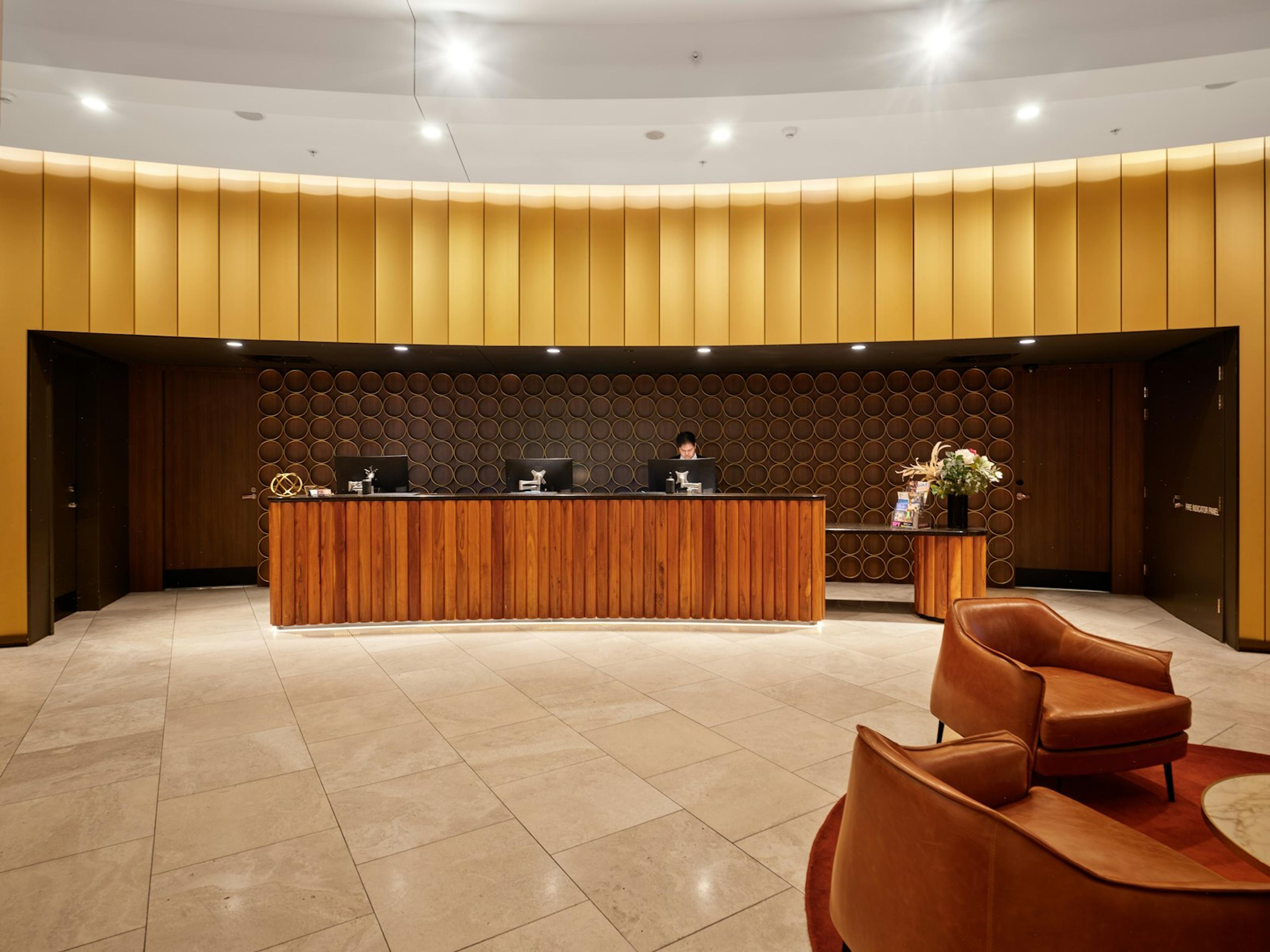
Cloud PBX for Hotels: Connect Front Desk and Mobile Staff
A guest calling a hotel rarely thinks in departments. They may want to change a booking, confirm a late arrival, ask about parking or report a problem from off-site. If the main number rings only at reception, every busy check-in, shift change or site outage can turn a valuable conversation into voicemail.
A well-designed hotel phone system connects that public number to reservations, the front desk and authorised mobile staff without forcing callers to understand the hotel’s organisation. Cloud Private Branch Exchange (PBX) technology can centralise that routing, but hospitality projects have extra constraints: guest-room phones, lift phones, emergency calling, Property Management System (PMS) data and round-the-clock operating patterns cannot be treated like ordinary office extensions.
This guide follows one hotel call from the first ring to a resolved outcome. It shows where queues, Interactive Voice Response (IVR), mobile softphones and multi-property overflow help, where specialist validation is still required, and how to test the staff calling layer before committing an entire property.
Design the hotel phone system around a guest journey
Start with a real call rather than a product feature list. Imagine a guest due to arrive after midnight. They call the hotel at 21:40 to confirm that reception will be open and to explain where the room key should be collected.
A useful routing path could work like this:
1. The guest calls the property’s published number.
2. The system recognises both the dialled number and the property’s current schedule.
3. A short greeting offers reservations or an existing-booking and front-desk option only if that choice reduces transfers.
4. The call enters the current front-desk queue, not one physical handset.
5. If the desk is serving guests and nobody answers within the agreed interval, the call overflows to a central reservations team or another authorised property.
6. After the evening handover, the same call can reach the duty manager’s managed mobile softphone.
7. The person answering sees the correct hotel identity, records the late-arrival note in the PMS and confirms the outcome.
8. If the property loses connectivity, a pre-tested fallback sends the call to a team that can still access enough booking context to help.
This journey creates an acceptance test. It also exposes weak assumptions. Routing a call elsewhere is not useful if the answering person cannot identify the property, access the booking or complete the promised action.
Split staff calling from room and safety endpoints
The first migration decision is not simply cloud versus on-premise. It is which communications workloads should move together.
Staff users may be good candidates for cloud-managed desk phones, desktop clients and mobile softphones. They have named roles, can authenticate, and often need to work across reception, an office and the wider property. Public hotel numbers, reservations queues, opening schedules and overflow policies can also fit a central routing layer.
Guest-room and specialist endpoints need a separate inventory. A property may still depend on:
- analogue room phones and existing cabling;
- lift, refuge-area, poolside or car-park help points;
- alarm panels, door-entry systems or fax-dependent processes;
- wake-up calling and room-status workflows;
- emergency-call location and notification requirements;
- a legacy hotel PBX interface used by the PMS.
Do not assume that every analogue socket can be replaced by a Session Initiation Protocol (SIP) handset or a staff app. SIP is commonly used to establish and manage Voice over Internet Protocol (VoIP) calls, but an analogue telephone adapter does not automatically preserve every voltage, signalling, location or resilience requirement of the old endpoint.
Create an endpoint register with its purpose, owner, location, connection, power dependency, current call path and failure behaviour. Mark each item as staff calling, guest service, safety-critical, specialist integration or retirement candidate. That prevents an apparently simple staff migration from silently breaking a room or emergency workflow.
Build front-desk and reservations queues that reflect the shift
A hotel queue should represent responsibility, not merely ring several devices at once. Define who owns each call type during morning departures, afternoon arrivals, evening service and overnight cover.
Keep the front-desk promise precise
“Front desk — Riverside Hotel” is more useful than “General.” The queue definition should name the property, covered call reasons, active hours, members, maximum wait, overflow destination and voicemail owner. If a group team covers several properties, the dialled number must remain visible so agents answer with the correct hotel name.
Let reservations follow the booking operation
Central reservations may answer sales and modification calls across a group, while an on-property team handles arrival details. Design routing around those permissions. A central agent who cannot approve a late checkout should not receive that request merely because they are available.
Make handover an event, not an informal forwarding rule
At the evening handover, change the active queue membership deliberately. Confirm unresolved callbacks, expected late arrivals, accessibility requests and current incidents. The phone system can move new calls to the duty role, but it cannot transfer operational knowledge by itself.
Keep IVR short enough for hospitality
A caller standing outside in bad weather should not hear a long menu. Reuse context already known from the dialled number and schedule. Measure transfers from each option: repeated transfers from “existing booking” to reception suggest that the wording or ownership model is wrong.
Give mobile hotel staff a controlled business identity
A softphone turns a smartphone or computer into a business calling endpoint. For duty managers, maintenance supervisors and selected housekeeping leaders, it can extend an authorised hotel identity beyond the desk without publishing a personal number.
Limit mobile access by role. The night duty manager may need to receive front-desk overflow, while a maintenance technician may only need direct calls from reception. Adding every worker to a queue creates interruption and makes ownership less clear.
Test the conditions that staff actually experience:
- an incoming call when the app has been idle and the screen is locked;
- both hotel Wi-Fi and mobile data, including movement between them;
- weak coverage in plant rooms, service corridors and car parks;
- the approved Bluetooth headset or earpiece;
- correct outbound hotel caller identity;
- quiet-hours and out-of-shift behaviour;
- remote deprovisioning after a lost device or staff departure;
- separation of business call history from personal contacts where required.
Mobile push notifications can alert the app without keeping a permanent foreground connection, but the result depends on the handset, operating system, push service, PBX and network path. A successful SIP registration beside an office access point is not evidence that a locked phone will ring reliably overnight. Use the mobile softphone push-notification test guide to build representative acceptance cases.
For media and signalling security, confirm support for Transport Layer Security (TLS) and Secure Real-time Transport Protocol (SRTP) across the complete service path. TLS can protect SIP signalling and SRTP can protect media, but both endpoints and any intermediary services must be configured consistently. The wider cloud PBX security checklist adds account, device and remote-user controls to the test plan.

Use multi-property overflow without losing local context
A hotel group can share resilience while keeping each property’s public identity. That does not mean putting every receptionist into one undifferentiated queue.
For each property, define:
- the local number and greeting;
- the normal answering team;
- which call types another property may handle;
- the delay before overflow;
- what hotel and caller context appears to the receiving user;
- which PMS permissions the overflow team has;
- how unresolved work returns to the originating property;
- what happens outside every property’s staffed hours.
Consider a burst of calls after a transport cancellation. The airport hotel may need another property to answer booking enquiries, but that second team may not have authority to change rates or room allocations. It can capture the request, confirm the correct callback expectation and protect the call from abandonment without pretending to complete work it cannot perform.
Overflow should therefore have modes. A fully trained central reservations team may resolve the call. A sister property might provide message capture and urgent escalation only. A third-party answering service may need an even narrower script. Encode those differences in queues, permissions and reporting.
The same principles apply to groups planning cloud PBX routing across multiple locations, but hotels should add PMS access, late-arrival policy and guest-safety escalation to the general branch model.
Treat PMS integration as a contract between systems
A Property Management System holds booking, room, guest and operational data. A PBX controls numbers, extensions, routing and call events. Integration should connect defined events between them rather than making either system responsible for everything.
Map each proposed interaction with four questions: what triggers it, which data moves, which system owns the final record, and what staff do if the integration is unavailable.
Useful hotel scenarios may include:
- showing the property or booking context when an identified guest calls;
- opening the correct record from an authorised front-desk screen;
- recording a callback task after an abandoned reservations call;
- synchronising selected room status or check-in events where a supported connector exists;
- passing queue, agent and call-time metadata into a service record;
- applying appropriate access rules when another property handles overflow.
Do not assume that a named “PMS integration” supports every version, deployment model or event. Ask for the exact connector, supported interfaces, authentication method, data fields, retry behaviour, logging and vendor ownership. Run tests with duplicate guest names, changed bookings, unavailable records and an integration outage.
Keep a manual fallback. If the screen-pop fails, the agent should still know which property was called and how to search the PMS safely. A routing design that depends on perfect data exchange can fail at the busiest moment.
Validate emergency, recording and privacy rules property by property
Hospitality sites combine public access, overnight operation and fixed-location endpoints. Emergency-calling requirements, number presentation, location information and on-site notifications vary by jurisdiction and service design. Obtain written confirmation from the relevant provider and qualified local advisers for every endpoint class. Test emergency procedures under controlled, approved conditions; never improvise a live emergency call.
Pay special attention to endpoints whose physical location matters. A mobile softphone may move around the site or off property. A lift or refuge phone may require independent power, supervision or a specialist service. Record the verified route and limitations in staff procedures rather than assuming the word “cloud” makes the requirement disappear.
If calls are recorded, define the business purpose, lawful basis, notice, access, retention and deletion. Reservations, payment discussions and sensitive guest requests may require different controls. Ensure overflow teams and mobile users follow the same approved policy, and prevent recordings or call data from being copied into personal storage.
Security review should also cover least-privilege administration, multi-factor authentication, unique user accounts, change logs, fraud controls, international-dialling permissions and rapid offboarding. Shared night-desk credentials make both incident response and routine auditing harder.
Plan what happens when the hotel loses a dependency
Cloud call control can reduce reliance on one PBX appliance in a back office, but the service still depends on connectivity, power, carriers, identity systems and endpoints. Continuity needs explicit routing and a drill.
Model at least these failures:
Property internet outage
Can the public number overflow to another property or authorised mobile endpoints automatically? Can that team identify the hotel and access the PMS through an independent connection? Test the answer rather than relying on a diagram.
Local power outage
Document battery support for routers, switches, Wi-Fi and any gateways. Separate the expected runtime of staff communications from specialist or safety endpoints. Decide which calls move off-site when local equipment disappears.
Mobile data or push-service problem
A duty manager’s app may stop receiving background calls even when the front desk remains online. Use a monitored escalation path and an approved alternative contact method. Do not let a personal mobile number become an undocumented permanent dependency.
PBX, SIP or carrier incident
Define status monitoring, provider escalation, number-level rerouting and staff communication. Keep a tested rollback or alternate route for the pilot number. Record how quickly the team detects the incident, restores an answering path and recovers missed calls.
A failover drill is successful only if guests still reach someone who has enough context and authority to help. Counting a forwarded call as “answered” can hide a failed service outcome.
Pilot one property, one number and one duty team
A controlled pilot should be large enough to expose real shift and network behaviour but small enough to reverse safely.
Phase 1: inventory and baseline
Record the chosen number, carrier ownership, current routes, extensions, queue members, opening patterns, PMS dependencies and specialist endpoints. Baseline answer time, abandonment, transfers, missed-call recovery, after-hours outcomes and recurring call reasons.
Phase 2: build a parallel staff workflow
Configure a test number or low-risk public route for one front-desk queue, one reservations overflow and a small duty-manager group. Provision desktop and mobile endpoints. Validate caller identity, permissions, TLS/SRTP, voicemail ownership, locked-screen wake, audio and offboarding before guest traffic moves.
Phase 3: introduce controlled live calls
Move one number or defined call type with a documented rollback. Observe morning departures, afternoon check-in, evening handover and overnight cover. Trigger a simulated internet failure with the hotel team present. Confirm the receiving team sees the property identity and can complete or correctly escalate the request.
Phase 4: decide from service outcomes
Compare the pilot with the baseline. Useful measures include:
- percentage answered within the property’s target;
- abandonment and repeated-caller rate;
- transfers before resolution;
- time to recover missed calls;
- successful locked-screen mobile wake tests;
- calls handled during the outage drill;
- user provisioning and removal time;
- guest or staff incidents caused by missing context.
Do not expand because the configuration is finished. Expand when the team can show that the call journey, integration fallback and continuity path work across representative shifts.
Run the staff endpoint test with SessionCloud
The managed mobile and desktop endpoint is one practical part of a wider hotel PBX project that can be tested now. Start a free SessionCloud trial with a small front-desk and duty-manager group. Validate provisioning, the correct business identity, locked-screen incoming calls, Wi-Fi and mobile-data behaviour, and rapid deprovisioning before those requirements are written into a wider rollout.
This focused trial does not replace due diligence for room phones, emergency endpoints, carriers, PMS connectors or a complete hosted PBX service. It gives hotel operators, Managed Service Providers (MSPs) and telecom resellers evidence about the staff calling layer. For branded app or reseller requirements, contact SessionTalk with the target PBX platforms, property count, endpoint mix and pilot call flow.

Make every guest call arrive with enough context
Cloud PBX for hotels is valuable when it preserves the hotel’s identity while making the answering team less dependent on one desk. The strongest design follows a guest request into the right queue, overflows it with clear permissions, reaches an authorised mobile worker when necessary and survives a property outage without losing operational context.
Keep staff calling separate from room and safety endpoint assumptions. Specify PMS events rather than buying an integration label. Validate local emergency and recording requirements. Then pilot one property and one number through real shifts and failure conditions.
The result should not merely be a ringing app. It should be a hotel phone system that helps the right person recognise the property, understand the request and own the next action.